Table of Contents
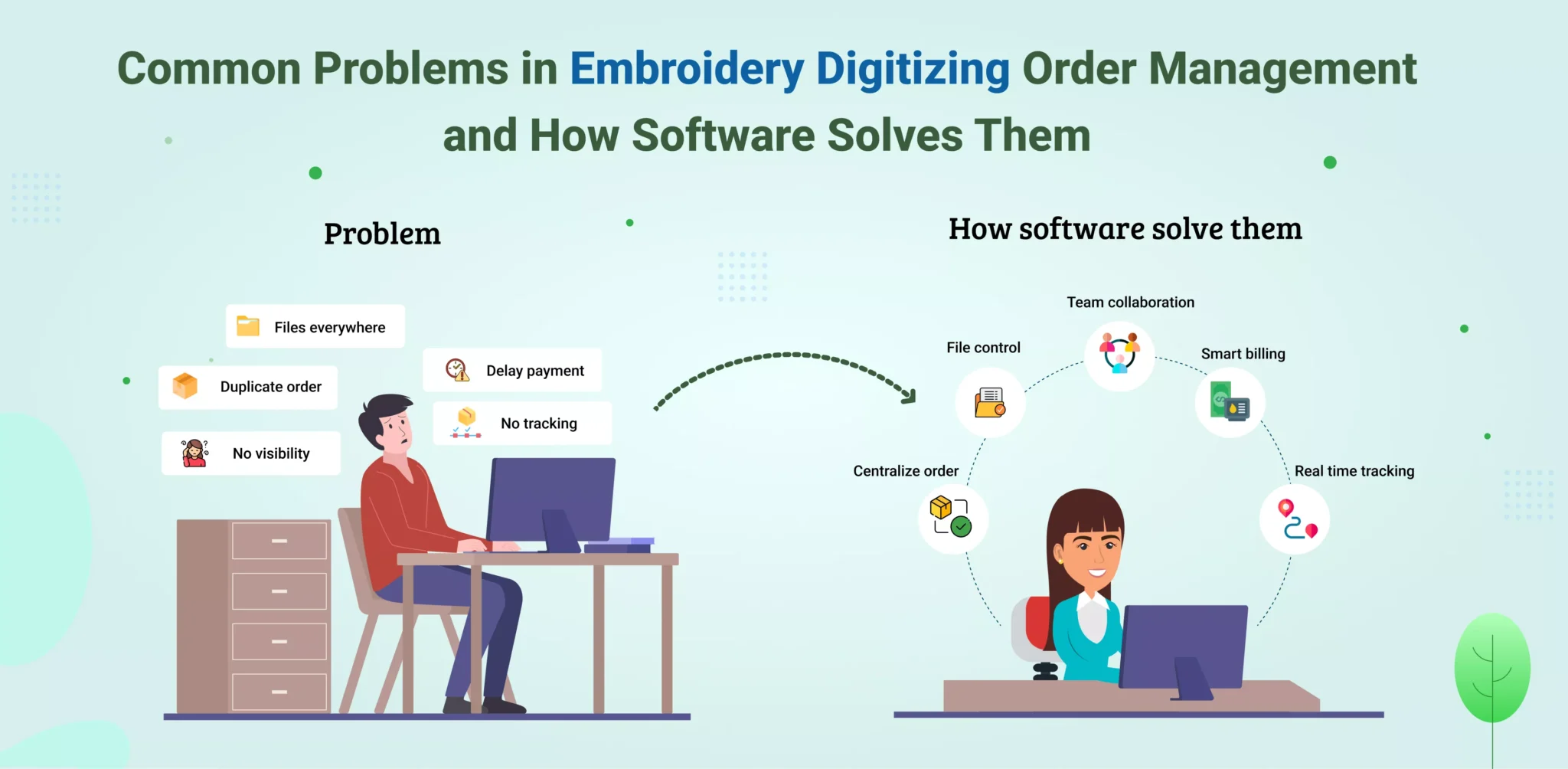
Common Problems in Embroidery Digitizing Order Management and How Software Solves Them
Embroidery digitizing and vector art companies manage a fast-moving workflow every day. Customers send artwork, production teams review requirements, designers prepare files, admins track revisions, and billing teams manage payments and credit balances. At the same time, every order has a deadline, file format requirement, stitch instruction, design size, and customer expectation attached to it.
When this process is handled through emails, spreadsheets, WhatsApp messages, manual forms, and separate billing tools, things can quickly become confusing. A missed file, wrong revision, duplicate order, or delayed payment update can slow down production and affect customer satisfaction.
This is where custom order management software becomes valuable. It brings orders, files, communication, billing, and tracking into one organized system built around the real workflow of embroidery digitizing and vector art businesses.
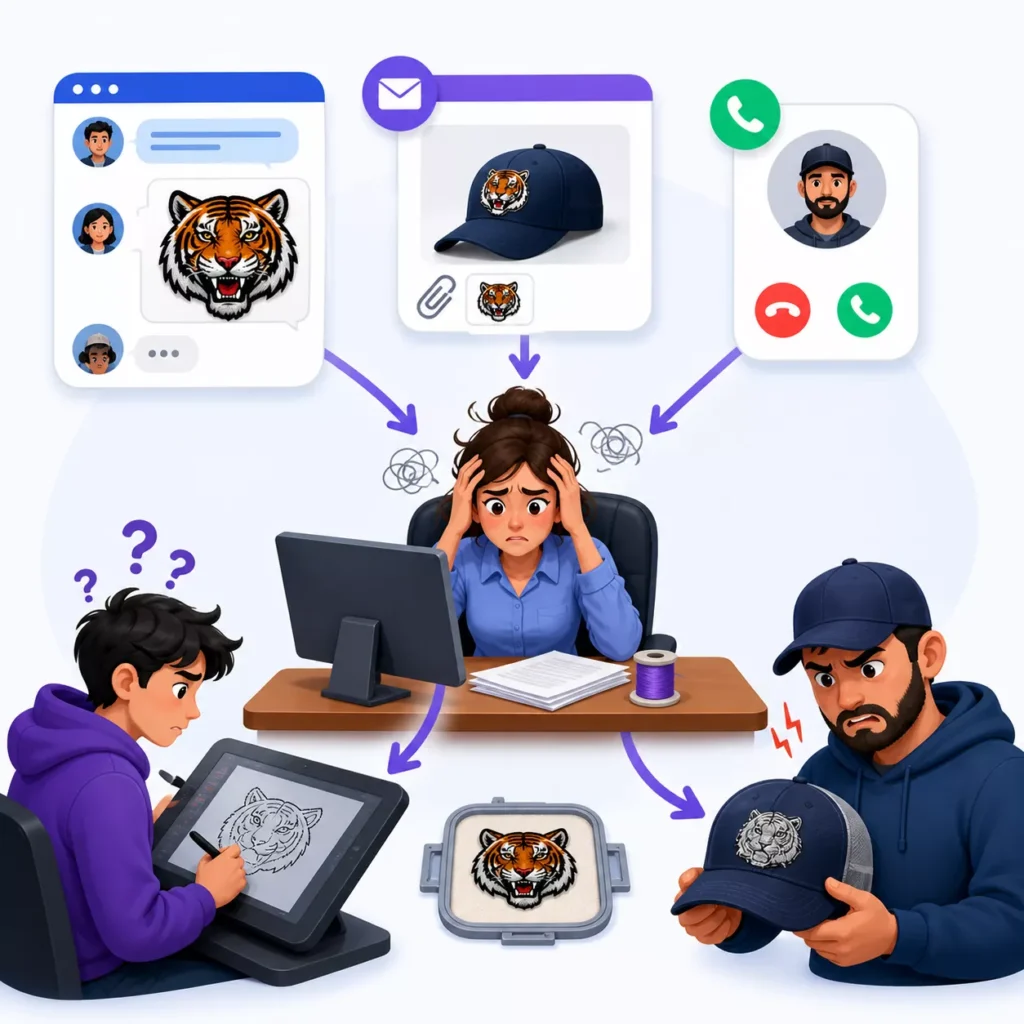
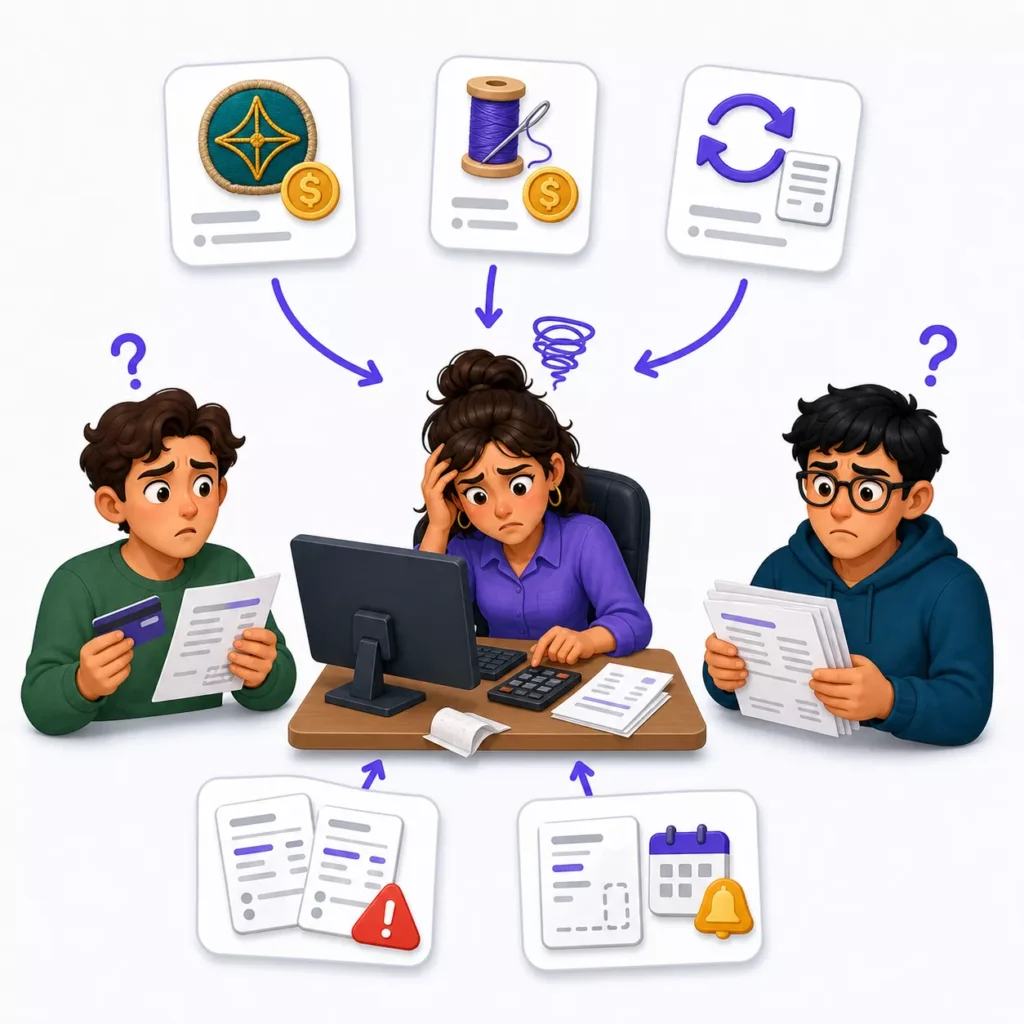
Problem 1: Scattered Order Details
Most embroidery digitizing businesses receive orders from multiple channels simultaneously. A customer might send a design brief over WhatsApp, follow up with the source file via email, and call in with additional instructions at noon. Meanwhile, another customer fills out an online inquiry form expecting a callback.
When order details live across different platforms, there is no single source of truth. Admins waste time hunting through chat histories and inboxes. Important instructions get missed. Designers start work based on incomplete briefs. Customers receive the wrong output and ask for revisions that should never have been necessary.
Problem 2: File Upload and Artwork Version Issues
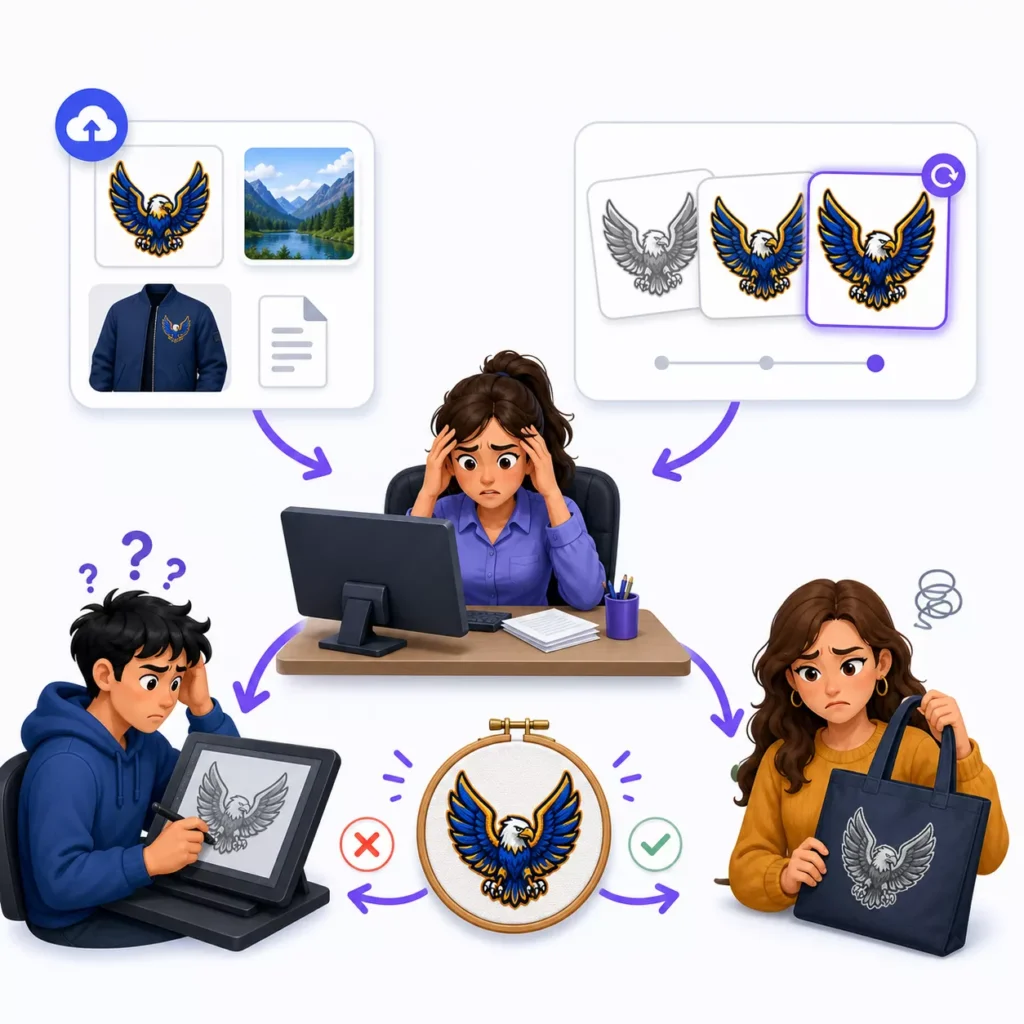
File handling is one of the biggest challenges in embroidery digitizing and vector art workflows. Customers may upload logos, reference images, old stitch files, mockups, and brand guidelines. Later, they may send revised artwork or request changes after seeing a preview.
Without a proper system, teams can lose track of which file is the latest version. A designer may accidentally work on an old logo, or an admin may send the wrong revised file back to the customer.
These mistakes waste time and can damage customer trust.
Problem 3: Duplicate Orders and Manual Mistakes
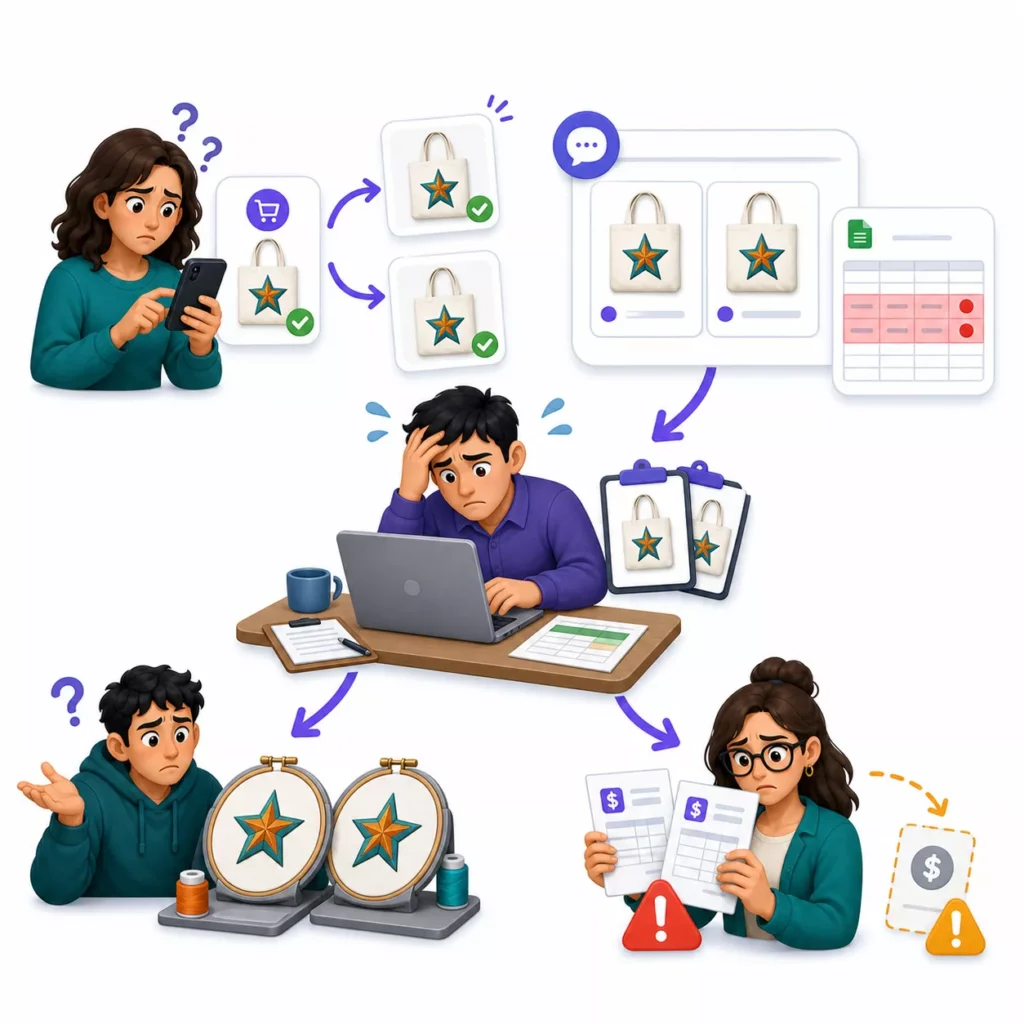
When orders are entered manually into spreadsheets or processed through shared inboxes, human error is inevitable. A customer submits a form twice because they were unsure if the first submission went through. An admin creates two entries for the same job when transferring details from WhatsApp to a spreadsheet. A billing entry gets skipped because the order was logged in two places.
Duplicate orders are particularly damaging because they consume production time that could have been used for other work. They also create billing confusion — you either invoice twice and irritate the customer, or fail to invoice at all and lose revenue. In both cases, the business suffers.
Problem 4: Poor Communication Between Admins, Partners, and Customers
In most embroidery digitizing businesses, communication happens everywhere except where it should — directly against the order itself. Admins relay customer instructions to a partner via WhatsApp. Partners send queries back via email. Customers are kept waiting while teams figure out answers internally. Partners handling overflow work are managed through separate message threads with no connection to the original job.
The result is constant context-switching. Every time a team member picks up an order, they need to piece together what happened from multiple places. Instructions get lost between channels. Critical notes go unread. Customers feel ignored even when the team is actively working on their job.

Problem 5: Billing and Payment Tracking Issues
Billing in embroidery digitizing businesses is rarely simple. You may charge per stitch count, per design, per revision, or through subscription packages. Some customers pay upfront. Others work on credit. Resellers accumulate balances over dozens of orders. Monthly invoices need to reflect all completed work with the correct pricing applied for each job.
When this is managed manually — across spreadsheets, accounting tools, and informal notes — errors are common. Payment reminders are sent late or not at all. Credit balances are miscalculated. Customers dispute charges because they have no clear record of what they owe and why. Revenue leakage happens quietly, and by the time it is noticed, recovering it is difficult.
Problem 6: No Real-Time Order Tracking
“Where is my order?” is one of the most common customer support queries in any service business — and embroidery digitizing is no exception. Without a transparent tracking system, customers have no way of knowing whether their order is in the queue, being digitized, awaiting approval, or already delivered. They send follow-up messages. They call the admin team. They grow frustrated, even when the work is progressing smoothly.
On the admin side, the problem is equally visible. Managers have no clear view of how many orders are active, which are overdue, which designers are overloaded, and where bottlenecks are forming. Without this visibility, workload planning is reactive rather than proactive — and deadlines are missed.

How Custom Order Management Software Solves These Problems
A custom-built Order Management System (OMS) designed specifically for embroidery digitizing and vector art businesses addresses each of these problems at a structural level — not with generic features, but with workflows built around how your team actually operates.
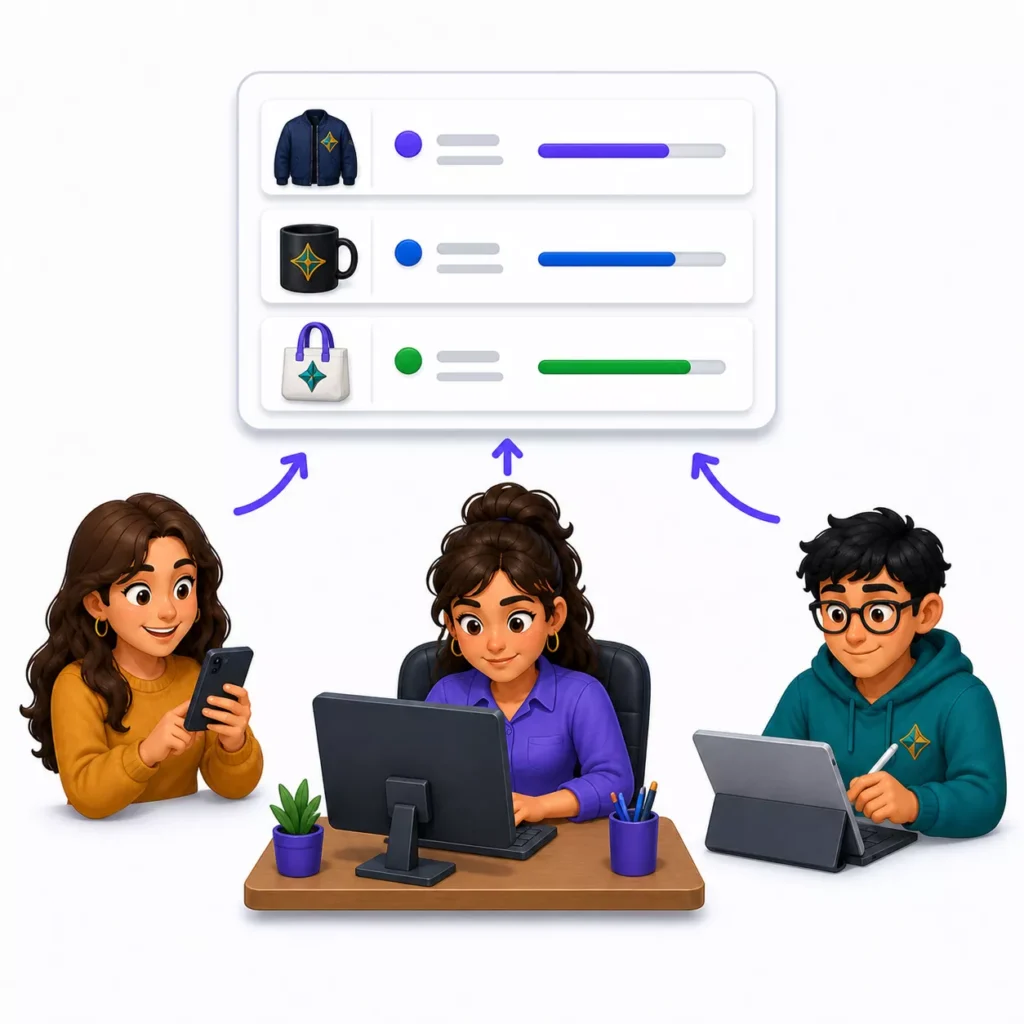
Centralized Order Dashboard
Every order — regardless of how it was placed — is captured in a single, unified dashboard. Admins see all active, pending, and completed orders in one view, with status indicators, assigned partners, deadlines, and client details. Nothing falls through the cracks because there is only one place to look.
Structured File Management with Version Control
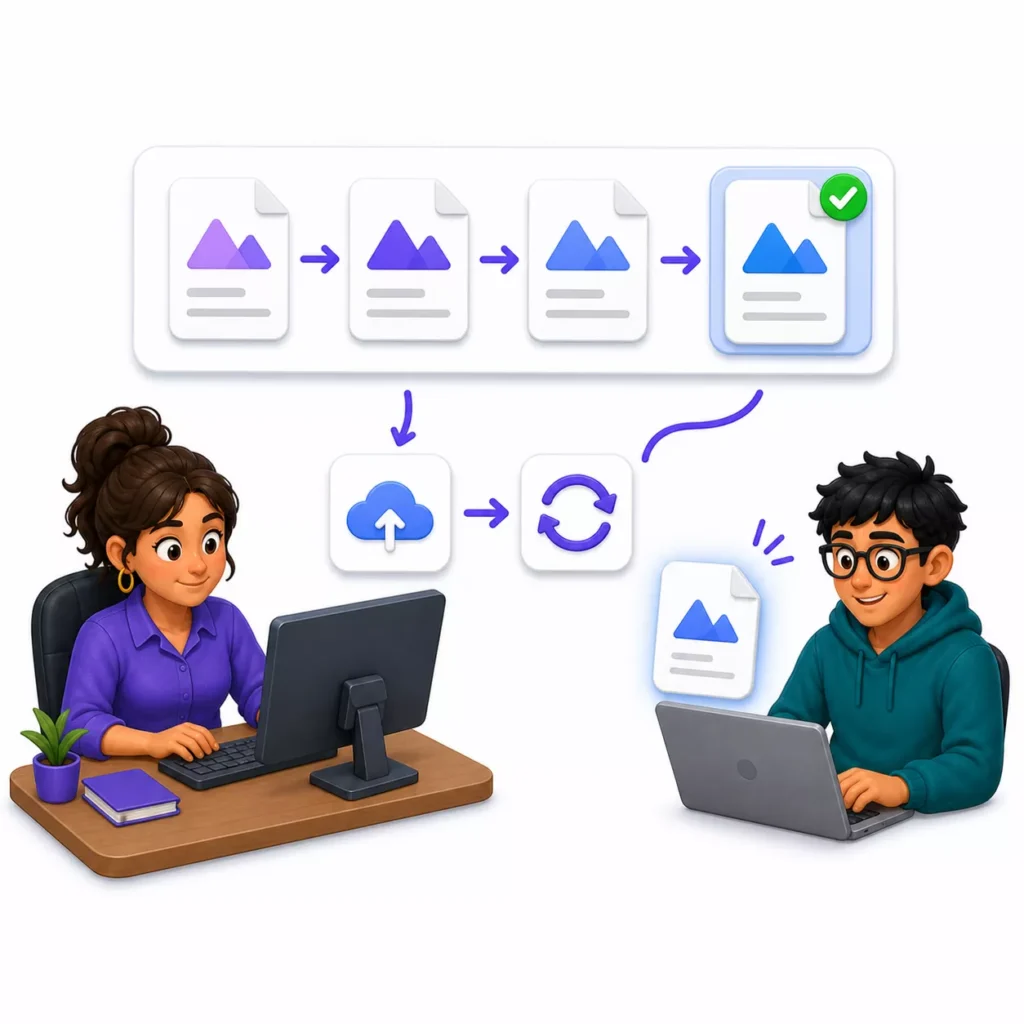
Files are uploaded directly to the order, not to a shared folder or email attachment. The system maintains a version history for every design file, making it clear which version was approved by the customer and which is currently in production. partners always work from the correct file. Revision history is preserved and auditable.
Duplicate Detection and Smart Order Entry
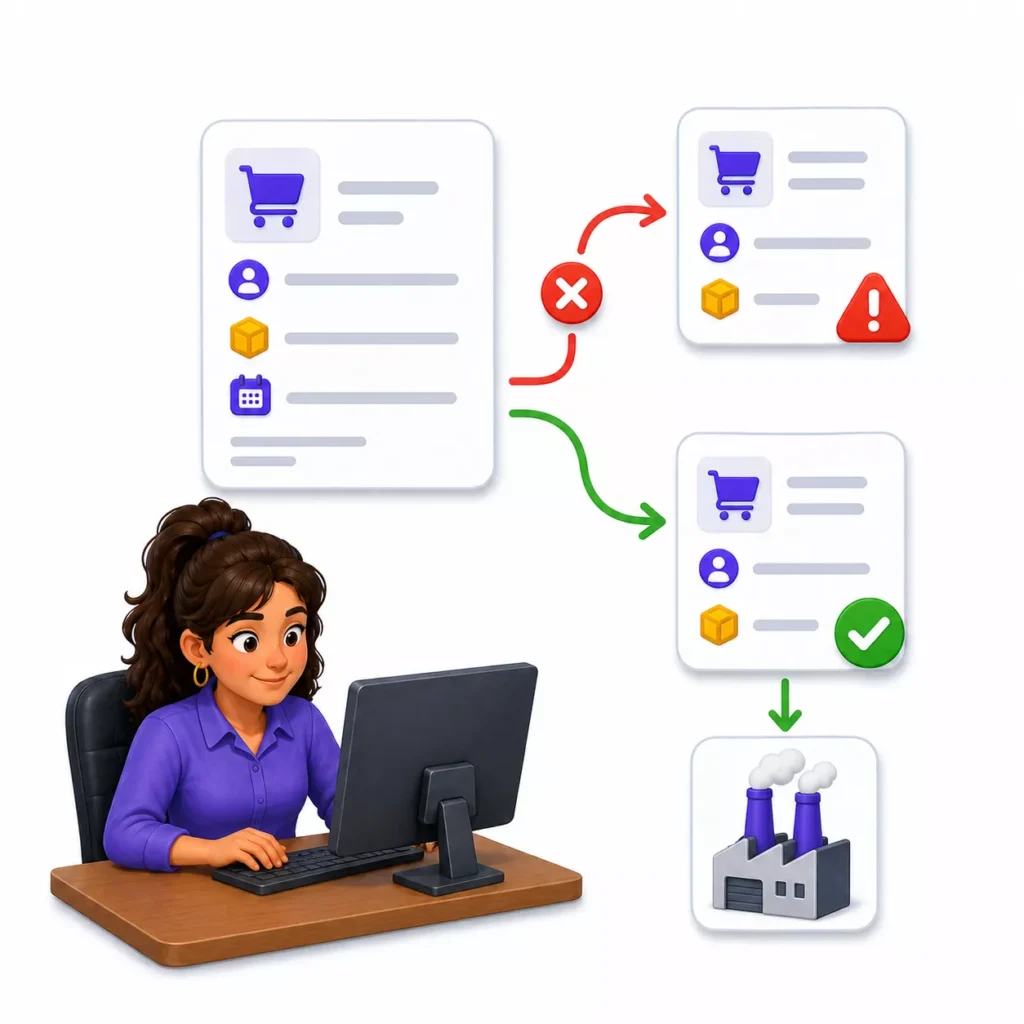
The system detects duplicate submissions based on customer identity, file similarity, or matching order details — and flags them before they enter the production queue. Standardized order forms replace free-form data entry, reducing manual errors and ensuring every order is complete before work begins.
Order-Level Communication and Role-Based Access
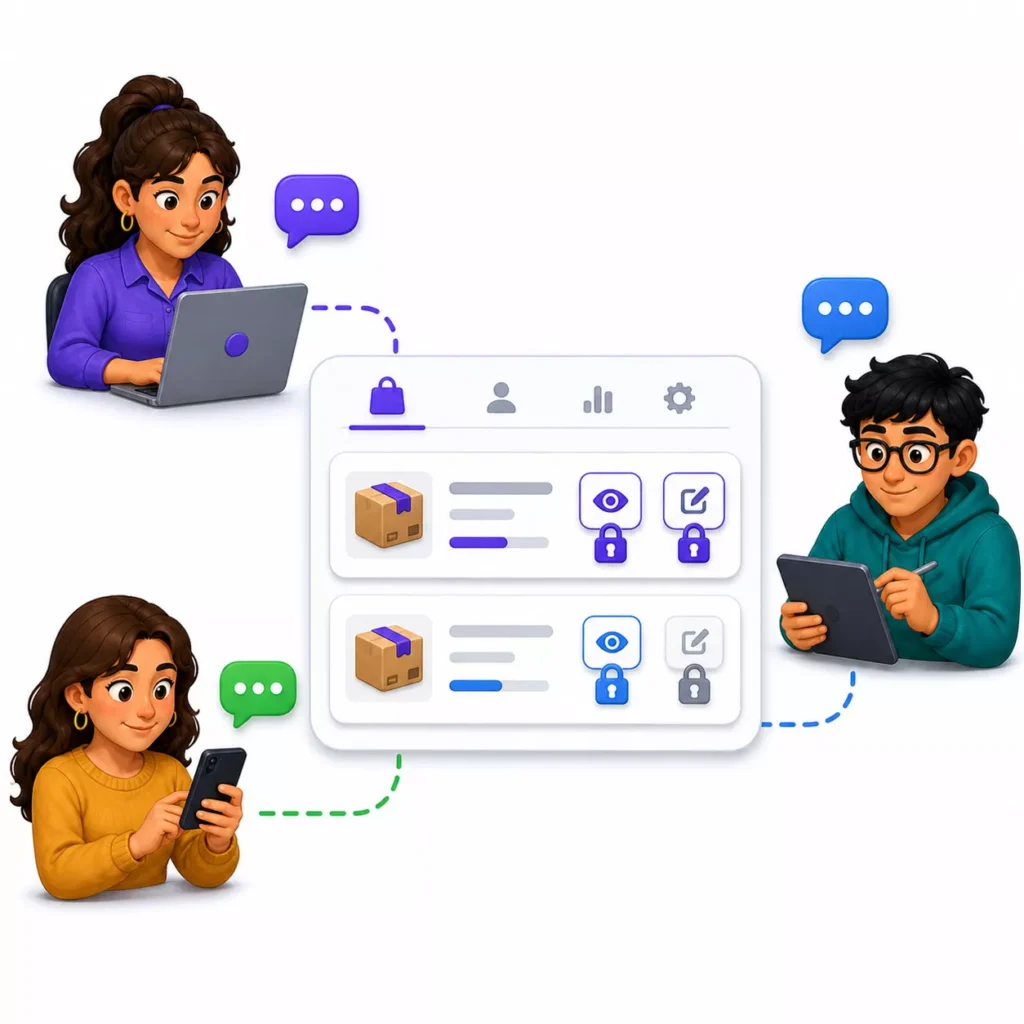
All communication — between admins, partner and customers — happens directly inside the order. Notes, revision instructions, approval messages, and internal queries are all attached to the relevant job. Role-based access ensures that customers see their own orders and files, and partners have access only to the jobs assigned to them.
Automated Billing and Payment Tracking
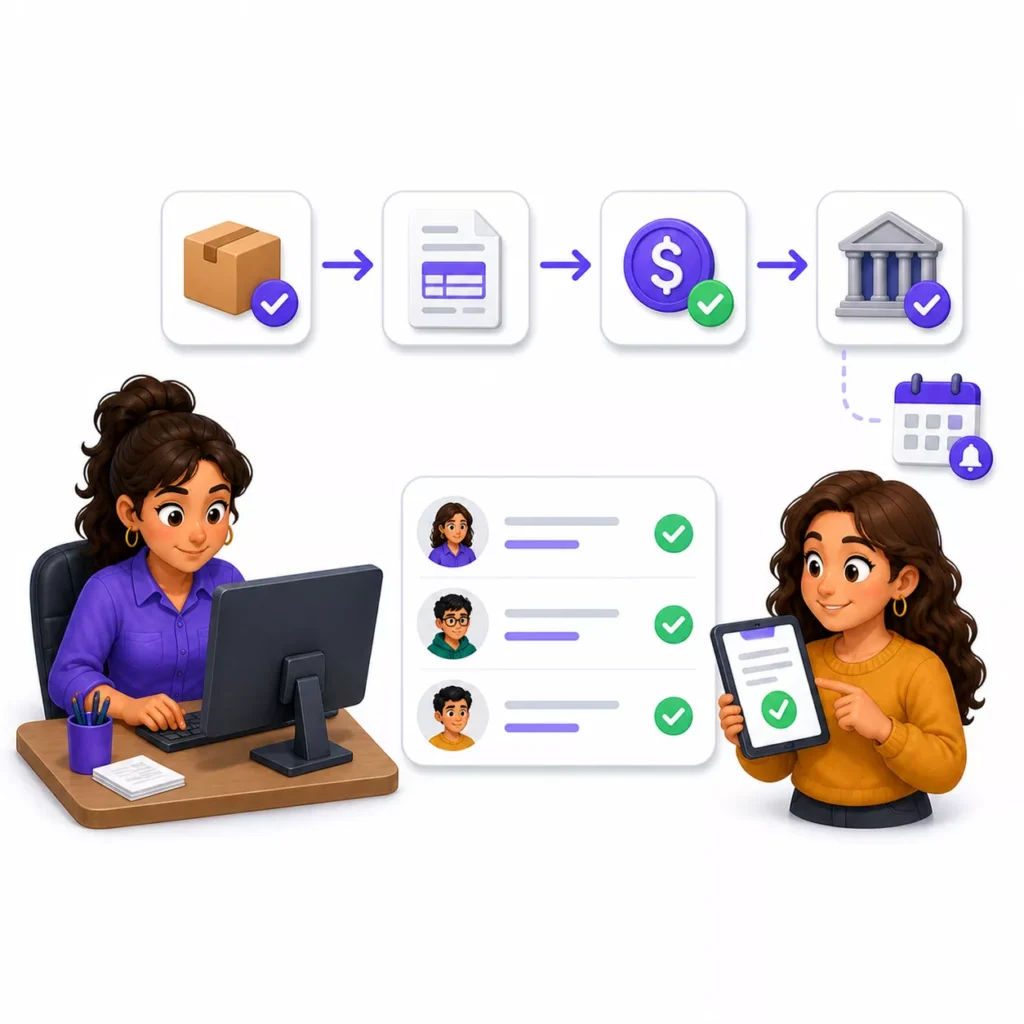
Invoices are generated automatically based on completed orders, with pricing rules applied consistently for each customer or pricing tier. Credit balances are tracked in real time. Payment reminders go out on schedule without requiring manual follow-up. Customers can view their billing history through the client portal, reducing disputes and improving payment speed.
Real-Time Order Tracking and Client Portal
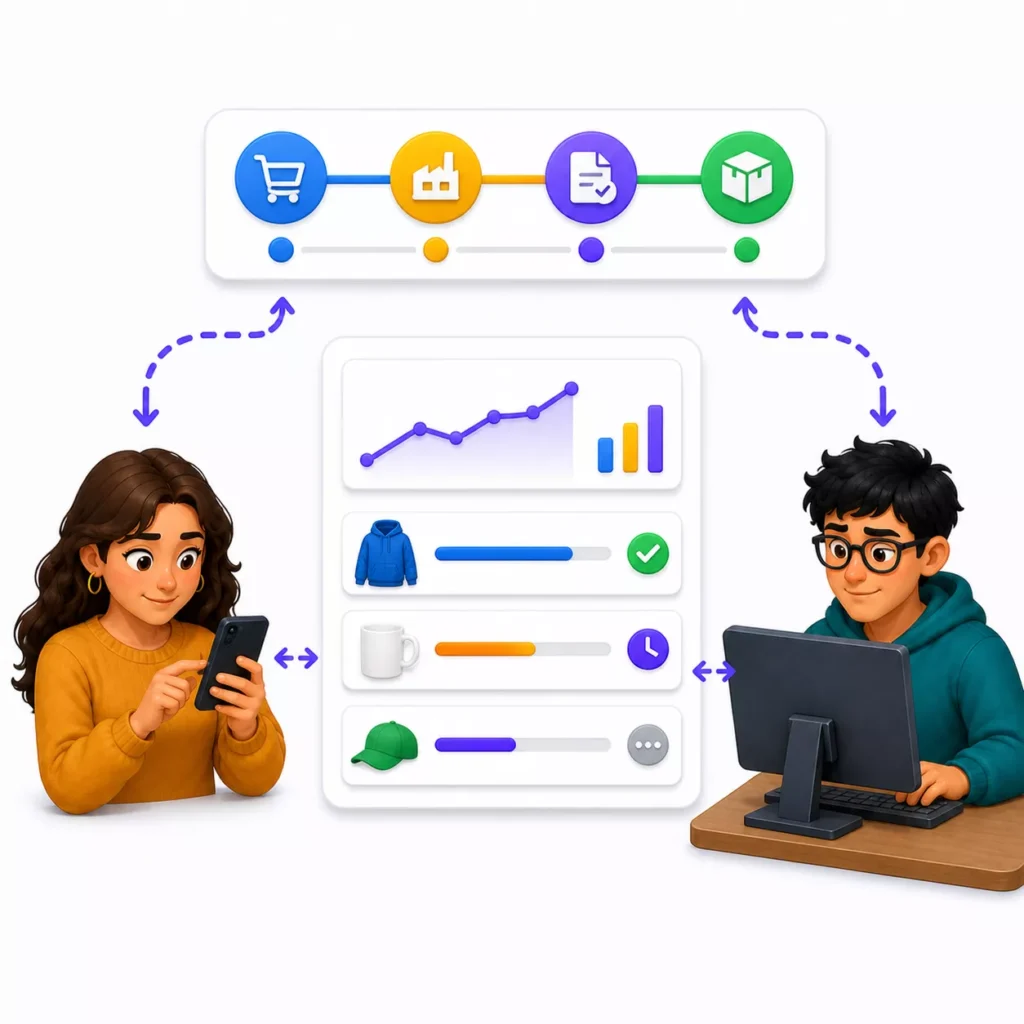
Customers log in to a dedicated client portal to check the status of their orders at any time — without needing to contact your team. Order stages such as “In Queue,” “In Production,” “Awaiting Approval,” and “Completed” are updated automatically as work progresses. Admins gain a real-time operations view that makes workload management and deadline monitoring straightforward and proactive.
Why Custom Software Works Better Than Generic Tools
You might wonder: why not use an off-the-shelf project management tool or a generic CRM? The answer lies in specificity.
Generic tools are built for the broadest possible market. They have no concept of stitch counts, embroidery file formats, digitizing revisions, or the difference between a customer-uploaded artwork and a production-ready DST file. They cannot enforce your specific pricing logic, manage design versions the way your team works, or give your customers a portal that reflects your brand and workflow.
Teams that try to adapt generic tools to embroidery workflows end up spending more time maintaining workarounds than doing production work. Features that should take one click require five. Reports that should be automatic require manual compilation. The tool that was supposed to save time ends up creating new overhead.
Custom software, by contrast, is built around your real processes. Every screen, every workflow, every automation reflects exactly how your team operates. Onboarding is faster because the tool speaks your language. Adoption is higher because the system does not fight your workflow — it follows it.
Key advantages of custom embroidery OMS software:
- Workflows mapped to your specific order intake and production process
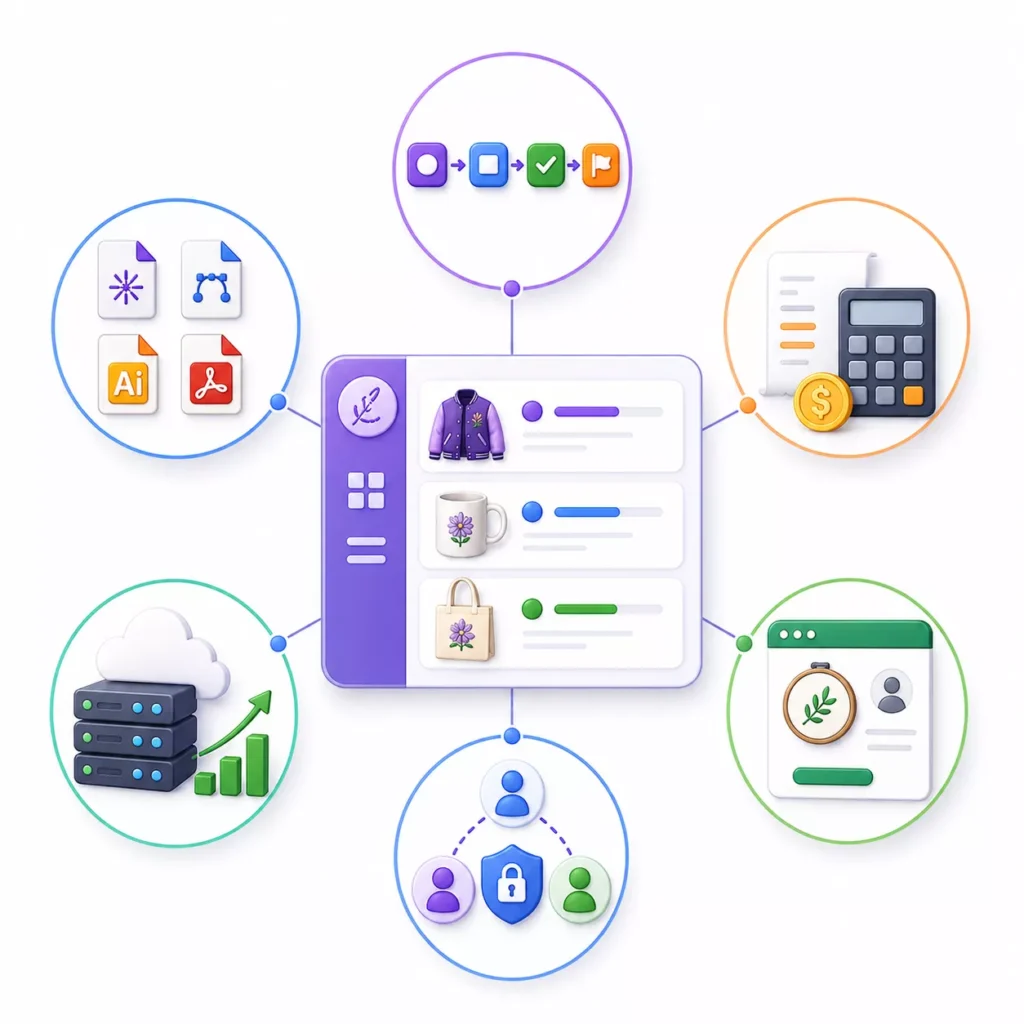
- File management built for DST, EMB, AI, EPS, PDF, and other embroidery/vector formats
- Pricing logic configured for stitch-count, flat-rate, package, or reseller billing models
- Customer portal branded to your business, not a third-party platform
- Partner and sub-contractor access built into the same system, not bolted on
- Scalable architecture that grows with your order volume without breaking your processes
Conclusion: Build Systems That Match Your Scale
Embroidery digitizing and vector art businesses face operational challenges that are unique to their industry. Scattered order details, version control nightmares, duplicate entries, disconnected teams, billing gaps, and zero visibility — these are not abstract problems. They are the daily reality for businesses trying to grow without the infrastructure to support that growth.
The good news is that every one of these problems is solvable — not by working harder, but by working with the right system. A purpose-built Order Management System transforms how your team receives orders, manages files, communicates, tracks work, and gets paid. The result is a business that can handle more volume with greater accuracy, faster turnaround, and far less internal friction.
If your current processes are slowing you down or creating errors you cannot afford, it is time to consider a custom solution built specifically for how your business works.
Support for eMail
supportmail@deepit.com
+91 99 789 369 78
Support for Web
supportweb@deepit.com
+91 99 789 369 56